International Air Freight and International Express Delivery: Differences Analysis
In the era of global economic integration, international logistics has become an important link connecting economic activities of various countries. Among them, international air freight and international express delivery are the two main cross-border logistics methods, each with unique advantages and characteristics, serving different types of goods and customer needs. This article will delve into the differences between international air freight and international express delivery from multiple dimensions, in order for readers to better understand and choose logistics methods that are suitable for their own needs.
1、 Definition and Basic Concepts
International air freight: refers to the cross-border logistics method of using air transportation vehicles to transport goods from one country's airport to another country's airport. It is suitable for long-distance and fast transportation of bulk, heavy or high-value goods, with characteristics such as fast transportation speed, long transportation distance, and large carrying capacity.
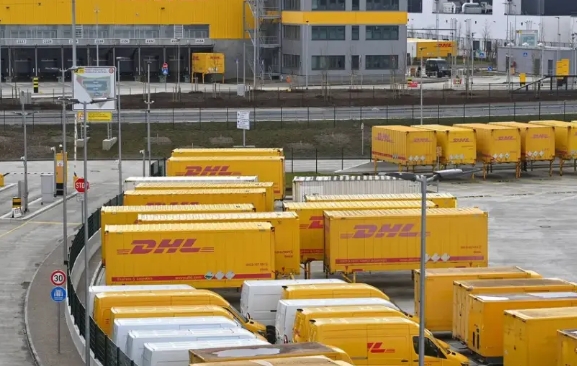
International express delivery: It is a more convenient and fast cross-border package and document delivery service. It is usually carried out through specialized courier companies, providing diversified services such as door-to-door or door-to-door to airports, ports, etc., with a wide coverage and flexible processing, suitable for the transportation of small, urgent or high-value items.
2、 Service scope and transportation network
The international air transportation network is mainly composed of major airlines and major airports around the world, with a wide coverage area, but limited by the airline's route layout and the geographical location of the airport. In contrast, international express delivery companies have more dense and flexible transportation networks, which can cover more regions around the world, especially remote and difficult to reach areas. In addition, international express delivery also offers a variety of service options, such as limited time delivery, next day delivery, etc., to meet the time requirements of different customers.
3、 Transportation process and operation mode
The transportation process of international air freight is relatively complex, including booking, customs declaration, security check, loading, flight, transit, customs clearance and other multiple links. The shipper needs to participate in the coordination and operation of multiple links to ensure the smooth transportation of goods. International express delivery adopts a more simplified and efficient operation mode, where customers only need to hand over the goods to the courier company, and all subsequent operations are handled by the courier company. The express delivery company has achieved rapid tracking and real-time updates of goods through advanced information systems and logistics networks, allowing customers to keep track of the transportation status of goods at any time.
4、 Cost effectiveness and price factors
In terms of cost-effectiveness, international air freight usually has lower unit transportation costs and is suitable for bulk transportation of bulk goods. However, considering additional costs such as customs clearance, delivery, warehousing, and potential risks of delay and loss, the total cost may not be low. In contrast, although international express delivery has a higher unit price, it provides more convenient, efficient, and reliable services, making it more cost-effective for the transportation of small, urgent, or high-value items. In addition, international express delivery prices are usually more flexible and transparent, and customers can choose different service levels and pricing schemes according to their own needs.
5、 Type of goods and processing speed
International air freight is suitable for transporting bulk, heavy or high-value goods, such as machinery and equipment, raw materials, electronic products, etc. It has fast transportation speed and large carrying capacity, which can meet customers' needs for fast and large-scale transportation. International express delivery is better at handling lightweight goods such as small packages, documents, and samples. It provides fast response, efficient processing, and direct delivery services, which can deliver goods to customers in the shortest possible time. For urgent or time sensitive goods, international express delivery is undoubtedly a better choice.
6、 Summary and Prospect
In summary, there are significant differences between international air freight and international express delivery in terms of service scope, transportation network, transportation process, cost-effectiveness, cargo type, and processing speed. The choice of logistics method depends on the specific needs of the customer and the characteristics of the goods. With the continuous development of the global economy and the advancement of logistics technology, international air freight and international express delivery will continue to leverage their unique advantages to provide more convenient, efficient, and reliable logistics services for cross-border trade and economic development. At the same time, with the deepening of green logistics and sustainable development concepts, the international logistics industry will also pay more attention to environmental protection, energy conservation and emission reduction in the future, promoting the sustainable development of the logistics industry.